Abstract (English)
The present essay explores Sanluri, the nerve center of Marmilla and the Middle Campidano, drawing a complete profile that combines the territorial origins, medieval history and the strategic importance of its castle. Through an analysis that ranges from the tragic Battle of 1409 and feudal dominion to the rich heritage of sacred architecture, popular traditions and historical museums, the text enhances the role of the village as guardian of Sardinian identity. The prospects for tourism and cultural relaunch of the town are also examined, highlighting the ability to combine historical memory with the challenges of modern enhancement.
Abstract (English)
This ity explores Sanluri, a pivotal hub of the Marmilla and Medio Campidano regions, outlining a comprehensive profile that combines its territorial origins, medieval history, and the strategic significance of its castle. Through an analysis ranging from the tragic 1409 Battle and feudal rule to its rich heritage of sacred architecture, popular traditions, and historical museums, the text highlights the town's role as a guardian of Sardinian identity. It also examines prospects for the town's tourism and cultural revival, emphasizing its ability to blend historical memory with the challenges of modern promotion.
A Journey to the Heart of Marmilla and Campidano
Sanluri stands as a fundamental crossroads of Sardinian history, a town that jealously guards the traces of a glorious and dramatic past. Located in a strategic position along the fertile plain of the Campidano and at the gates of the historical subregion of Marmilla, Sanluri represents much more than a simple village to visit: it is a real open-air archive where the stone tells centuries of dominations, epic battles, deep faith and legends that challenge the time. Crossing its streets means making a journey that starts from the night of the times, crosses the judging age, collides with the rigid Spanish feudal system and arrives until today with a cultural and associative vitality that aims to strongly rival the identity of the village. With its majestic medieval castle, its churches rich in history and historical re-enactments of international importance, Sanluri sings himself to rediscover and show the world its extraordinary cultural and landscape heritage.
Origins and Territory: From Earth Fertility to Ancient Roots
The area on which Sanluri stands is characterized by an extraordinary agricultural vocation, wet by a fertile plain that since the earliest times has favoured the human settlement. Some historians attest that traces of human habitation and settlements were already present in the nuragic and Roman times, entering into that dense fabric of cyclopic towers and archaeological evidence that punctuate the entire Marmilla. Located at an altitude of 135 meters above sea level and easily accessible along the SS 131, the town has historically played a hinge and administrative point of reference for the surrounding area. Its morphology, inserted between gentle hills and large cultivated stretches, creates a landscape setting of great charm, where the nature and the work of man merge into a unique balance.
The Medieval Age and the Strategy of the Judges
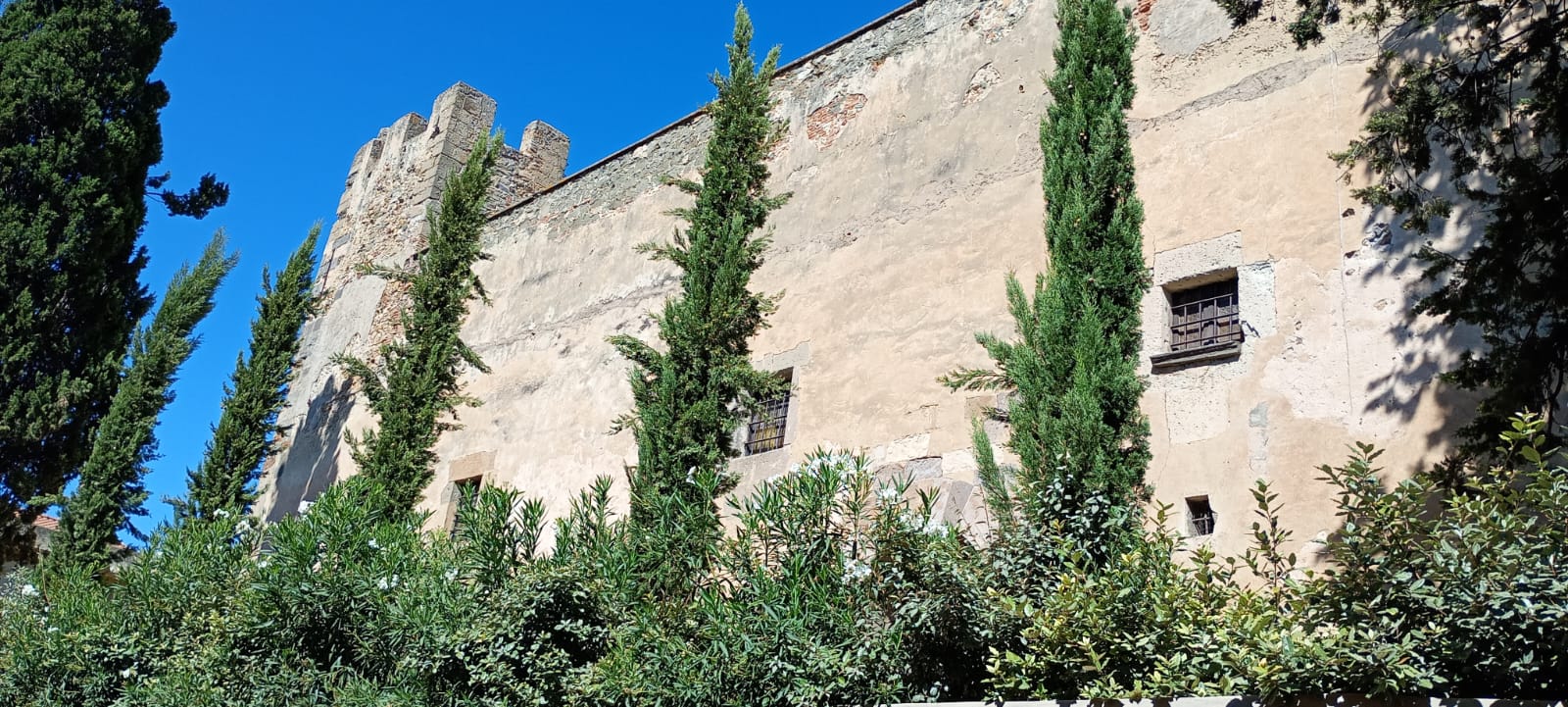
During the Middle Ages, the geographical position of Sanluri made it an outpost of primary geopolitical importance. The village originally stood at the border between the Giudicato di Cagliari and the Giudicato di Arborea, a line of hot and disputed demarcation. The territory saw the rise of its most iconic architectural element: the Sanluri Castle. Built initially during the judging period by the Arboreans to defend the borders and control the ways of communication and the wheat stored in the surroundings, the castle was probably born as a large tower protected by a fortified courtyard. Its strategic position along the hill prompted the Aragons to further strengthen it in the middle of the fourteenth century, transforming it into the fulcrum of bloody clashes for the control of the island.
The Battle of Sanluri (1409): The End of an Epoca
The date of 30 June 1409 represents one of the most dramatic and important watersheds in Sardinian history. It was then that the famous Battle of Sanluri, fought between the army of the Aragonese invaders — recently landed in Cagliari and led by King Martino il Giovane — and the troops of the Judge of Arborea, led by William III of Narbona.
The overwhelming victory of the Aragons in fact marked the beginning of the end of the judicial independence of Sardinia, which in a few years disbanded under the weight of the new domination. The ferocity of the clash and the drama of the massacre left an indelible mark in the collective memory, immortalized also in the name of the place where the carnage of Sardinian soldiers took place, since then called ♪ (the slaughterhouse).
Around the castle and the village, the Arboreans erected a wall of cinta and dug a large ditch, but nothing could against the force of the Aragonese army, which after victory plundered and partially destroyed the inhabited.
The Feudal Regime and the Nobiliary Dynasties
After the phase of armed conflicts, Sanluri entered the feudal era under various dominations and noble houses. The fief was first erected by the Visconti, then passed to the De Sena family, which retained it until the beginning of the fifteenth century.
After several vicissitudes, in 1478 the control passed to the Castelví family, which preserved it until the advent of Piedmontese domination in the 18th century. Later, due to lack of direct heirs, the fief was transmitted to a side branch, the Marquis Aymerich, which ruled the village until the definitive abolition of feudalism occurred in 1836. Centuries of taxation and heavy domination which however failed to extinguish the deep soul of the local community.
The Castle of Sanluri: Keepers of Memory and Treasures
Today the Castle of Sanluri (also known as Castello di Villa Santa) is in a square shape, with 26 meters sides and 12 meters high walls. Inside, the building houses a museum heritage of exceptional importance, divided into four distinct collections ranging from historical times to resurgent and colonial testimonies:
- La Sala delle Milizie e il Museo del Risorgimento: Crossing the court is accessed to rooms that preserve canvases from the sixteenth to the eighteenth century, period furniture, tapestries, porcelain and important historical relics, including the famous bulletin of the victory of the First World War undersigned by General Armando Diaz.
- The Hall of Justice: The ancient throne room, which, according to tradition, hosted the same Eleonora d'Arborea between 1383 and 1388. Here the story mixes with myth and legendary stories related to judging events.
- The Exhibition Rooms and the Feudal Room: Along the building there are sections dedicated to colonial wars, fascism and World War II, as well as the evocative Dining Room (which houses over 300 pieces made by great artists between the five and the nineteenth century) and the feudal apartment with the bedroom that welcomed the historical stays of the Giudicessa.
7. Legends and Mysteries: The "Bella di Sanluri" and the Signorini
The history of Sanluri is woven with fascinating legends that hand down from generation to generation. Among the most famous is the one linked to the tragic figure of the "Bella di Sanluri". The popular tradition that, after the conquest of the castle and the killing of the defenders in 1409, the Aragonese ruler decided to save a girl of extraordinary beauty, keeping her for herself. The young man, eager to avenge his people and his people, succeeded with diabolical and diabolical amples to weaken him to such a extent as to lead him to death in only twenty days (although historians simply lead the death to causes of malaria). Another split of urban and popular anthropology is related to the figure of I'm sorry. (the lords): it is said that a comitive of wealthy people sunny to stay near the civic palace to drink properly and ironize on the poorest or unfortunate citizens, crystallizing social dynamics of a past age.
The Sacred Architecture: Churches and Testimonials of Faith
Around the historic core of the castle, the village of Sanluri is embellished with cult buildings of extraordinary architectural and spiritual value:
- The Church of San Lorenzo: Located a few meters from the castle, it has a simple façade animated by a small rose window and a two-light sailing bell, where the original bells still read the dates of 1320 and 1434. Stores late-catalogue inlet portals and a characteristic arcade added at a later time.
"Sa Battalla": The Middle Ages
Every two years (in the odd years), the town of Sanluri returns to live the splendor and dramas of the Middle Ages thanks to "Sa Battalla", the most important and beloved historical reenactment of Sardinia. The event recalls thousands of visitors from all over the island and not only, transforming the village into an open-air stage.
Figures, armigers, knights in period dresses, iron knitting, arches, crossbows and siege machines faithfully reconstruct the great clash of June 30, 1409. Between exhibitions, conferences, play shows, medieval taverns and craft markets, the event represents the core of the cultural and tourist promotion of Sanluri, combining rigorous historical research to the spectacularness of the festival
Towards the Revelation and the Valorization of Tourism
Today Sanluri is a must for anyone who wants to discover the most authentic, deep and historically rich face of Sardinia. Its ability to network with the centers of Marmilla and Medio Campidano (of which it has long been administrative capital), combined with the valorization of its food and wine excellences, natural trekking paths and museum heritage, shows how the village can look to the future without forgetting its roots.
Investing in the rivalry of Sanluri means restoring centrality to a territory that has paid the price of history but which preserves intact a unique dignity and beauty. Walking through its walls, listening to the retouching of its ancient bells and going through the rooms of its castle means making an experience of transformative journey, in which every stone tells a story of resilience, passion and Sardinian identity.
Bibliography
- Casula, Francesco Cesare. History of Sardinia: Political, economic, social and cultural evolution from prehistoric times to contemporary age. Sassari: Carlo Delfino Editore, 1994.
- Costa, M. History of Sardinia and its historical monuments. Cagliari: Regional editions, 1998.
- Tola, Pasquale. Codex Diplomaticus Sardiniae. Torino: Typographia Regia, 1861.
- Raspi Paper, Raimondo. Sardinia dei Giudicati. Cagliari: Of the Church, 1969.
Website
- Autonomous Region of Sardinia - Official Tourism Portal SardiniaTurismo:www.sardegnaturismo.it (Sections dedicated to the Middle Campidano, the Marmilla and the historical and cultural heritage of Sanluri).
- Institutional site of the Municipality of Sanluri: www.comune.sanluri.su.it (Historical information, cultural itineraries, monumental goods, castle and local traditions).
- Official website of the Sa Batalla event: www.sabatallasanluri.it (Information on the historical reenactment of the battle of 1409).
- Master catalogue of cultural heritage - Ministry of Culture: catalogue. cultural heritage. it (Descriptive records of the architectural, religious and museum heritage of Sanluri and the surrounding area).