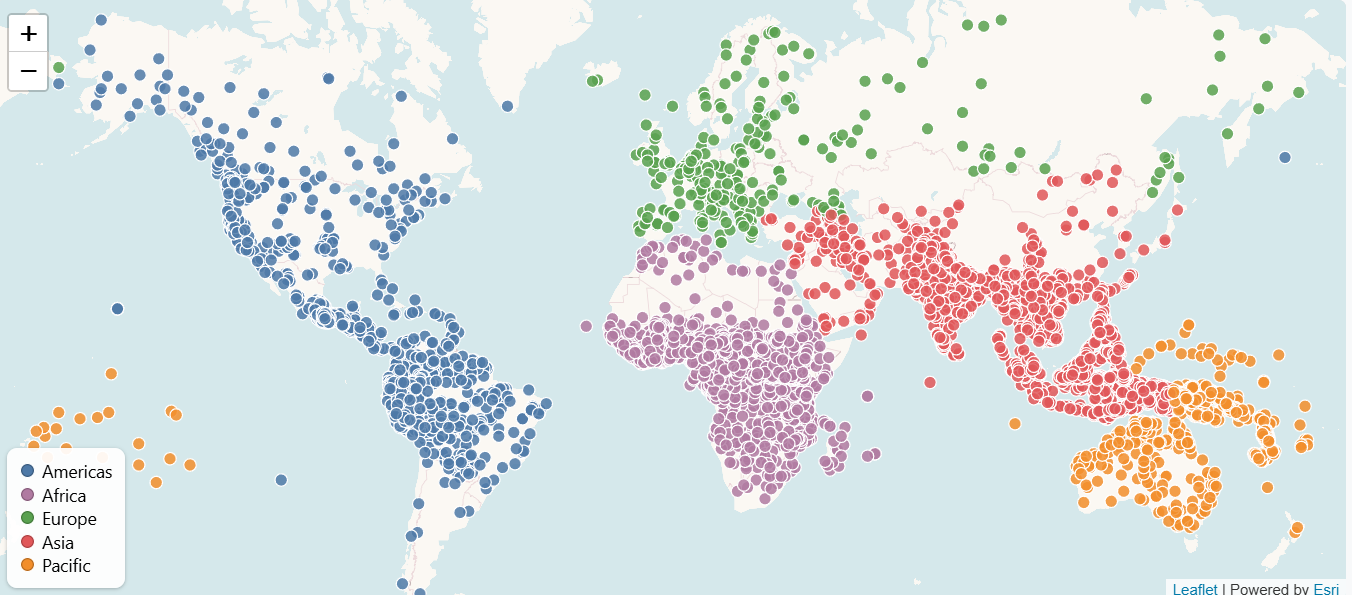
The extinction of a language is not only the end of a communication code or the disappearance of a fascinating grammatical structure; it represents the irreversible cancellation of an entire archive of biodiversity and empirical knowledge accumulated in millennia of coexistence with the environment. In its fundamental contribution to the protection of linguistic diversity, linguist David Crystal highlighted how the ecology of languages is indissolubly linked to the environmental ecology of our planet. Every time an indigenous language turns out, the world loses a unique lens through which to understand, guard and protect terrestrial ecosystems.
The loss of an idiom impoverishes humanity no less than deforestation or disappearance of an animal species. Native speakers of risky communities in fact preserve a taxonomy of nature that often anticipates, and sometimes overcomes in ecological precision, modern Western science.
The ecological heritage of languages
The botanical taxonomy of the Maya Itza (Guatemala): Speakers of this language have a thorough knowledge of medicinal properties and use of hundreds of tropical forest plants, with taxonomic classifications that often exceed the same western botanical science for ecological detail.
The Guugu Yimithirr orientation system (Australia): This native Australian language does not use concepts related to the body as "right" or "left", but is based exclusively on absolute cardinal points (north, south, east, west), developing in the speakers a spatial and geographical perception superhuman and constant.
The traditional zoology of Hanunoo (Philippines): They distinguish hundreds of types of insects and plants, combining them with complex ecological cycles linked to the soil and the local climate that no other language system documents with the same precision.
Inuit weather lexicon (Artico): Inuit language varieties have dozens of specific terms to describe the different consistencies, behaviours and dangers of ice and snow, vital information for survival and navigation in extreme environments.
The herbal medicine of Kallawaya (Bolivia): A community of itinerant healers that preserves a secret language (of puquina origin) used exclusively to hand down the traditional pharmacopoeia and knowledge of hundreds of Andean medicinal herbs.
The forest management techniques of the Kayapó (Brazil): Their language preserves a detailed terminology for the creation of "fertility islands" in the forest through controlled use of fire and composting, techniques that modern science is only studying recently.
Ethno-Oceanographic knowledge of Ulithi (Micronesia): The nautical terms and the taxonomy of the winds and marine currents present in their language allow a navigation and a forecast of time in open sea without the help of electronic instruments.
Ecological knowledge of the Seri (Mexico): The serious language contains detailed names and descriptions of the behavior of unique species of the Sonora Desert and the Gulf of California, including marine vital cycles that biologists could map only thanks to the indications of native speakers.
Dyirbal Botanical Cataloging (Australia): Their complex grammatical structure and vocabulary categorize the natural world and the healing properties of the local flora according to ecological relationships that reflect a deep balance with the habitat.
Knowledge of the fauna of the Khoisan peoples (Sudafrica/Botswana): The click languages contain a thousand-year terminology on desert geology, underground water points and wildlife behaviour, essential for survival in the arid areas of Kalahari.
Why defend linguistic diversity
As David Crystal's perspective reminds us, linguistic diversity and biodiversity share the same fate and habitat: the areas with greater wealth of languages in the world are often the same as the greatest biological biodiversity. To break the link between a people and their language means to cut down that cultural transmission thread that allows to combine nature conservation with human survival. Recognising the ecological dignity of each language is not an exercise of academic nostalgia, but an indispensable strategy for the future of the planet.